
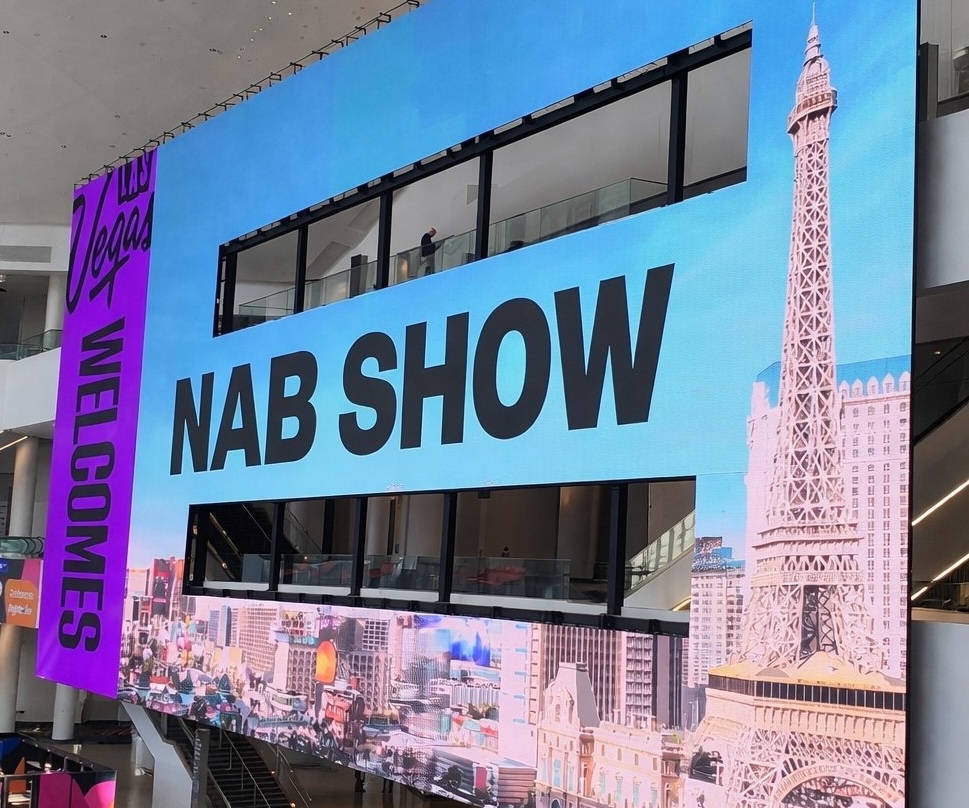
NAB 2026: AI Moves From Hype to Media Infrastructure
The 2026 NAB Show in Las Vegas made one thing clear: the media and broadcast industry has entered a new phase of AI adoption.
For the past few years, artificial intelligence has been discussed mostly as a creative experiment — a way to generate images, write scripts, edit clips faster, or test new storytelling formats. But at NAB 2026, the conversation shifted. AI was no longer presented as a futuristic add-on. It was embedded directly into the operational backbone of media production, distribution, verification, and monetization.
In other words, AI is becoming part of the media supply chain.
From AI Experiments to AI Workflows
The most important takeaway from NAB 2026 was that AI is now being integrated into real production environments.
The focus was not only on generative AI tools that create content from prompts. Instead, exhibitors and award-winning products showed how AI can support the entire media workflow: newsroom automation, metadata generation, live translation, video enhancement, rights management, monitoring, asset discovery, content moderation, and post-production.
This marks a major change for broadcasters, publishers, streaming platforms, and media technology companies. AI is no longer just a creative assistant. It is becoming infrastructure.
Content Authenticity Became a Core Industry Concern
Another major theme at NAB was trust.
As AI-generated and manipulated content becomes easier to create, broadcasters and publishers are under growing pressure to verify what is real, what has been altered, and where a piece of media came from.
That is why content authenticity and provenance technologies received serious attention at the show. Tools based on standards such as C2PA are becoming increasingly important for newsrooms, broadcasters, and platforms that need to prove the origin and integrity of video, images, and audio.
This is especially relevant for news coverage, elections, conflict reporting, and social media monitoring. The more synthetic content enters the information ecosystem, the more valuable verification infrastructure becomes.
Cloud and IP Production Keep Replacing Legacy Broadcast Systems
NAB 2026 also reinforced the industry’s continued move toward cloud-based and IP-based production.
Traditional broadcast infrastructure is being replaced or extended by hybrid workflows that allow teams to produce, edit, manage, and distribute content from anywhere. Cloud-native platforms are making it easier for broadcasters and studios to scale production, collaborate remotely, and manage large volumes of media assets.
This trend is particularly important for organizations managing live events, sports coverage, multilingual content, or distributed production teams. The future of media operations is increasingly cloud-connected, flexible, and software-defined.
Sports Media Remains a Major Innovation Driver
Sports was one of the strongest themes at NAB 2026.
Live sports continues to push the media industry forward because it demands speed, reliability, personalization, and high-quality production at scale. Technologies showcased at NAB focused on remote production, real-time highlights, multiview streaming, automated clipping, fan engagement, and AI-powered analysis.
For broadcasters and streaming platforms, sports remains one of the most valuable content categories. For media technology companies, it is also one of the best testing grounds for AI-powered production and distribution.
Creator Tools Are Becoming Professional Media Infrastructure
Another important signal from NAB was the growing importance of the creator economy.
Creator tools are no longer being treated as lightweight consumer apps. They are becoming part of the professional media ecosystem. Companies such as Adobe, Blackmagic Design, Canon, Fujifilm, Nikon, Insta360, LucidLink, Epidemic Sound, and Opus Clip all reflect a broader shift: individual creators and small teams now need tools that look much more like professional broadcast infrastructure.
This creates a new middle layer in the media market. Between traditional broadcasters and casual social media users, there is now a large class of professional creators, independent publishers, agencies, podcasters, and video-first brands that need scalable, AI-assisted production tools.
What This Means for Media Companies
The biggest lesson from NAB 2026 is that media companies need to stop thinking about AI as a separate innovation project.
AI is becoming part of every layer of the media business:
production, editing, translation, verification, monitoring, asset management, personalization, distribution, and monetization.
For broadcasters, this means faster and more flexible operations. For publishers, it means new ways to package and distribute content. For streaming platforms, it means more personalized and automated experiences. For media monitoring companies, it opens the door to real-time multilingual analysis, synthetic media detection, and deeper intelligence around content performance and misinformation.
The Strategic Opportunity
The companies that win in this next phase will not simply be the ones that add AI features to existing products. The winners will be those that build AI-native media workflows.
That means combining:
- AI automation
- content verification
- multilingual processing
- cloud infrastructure
- real-time analytics
- rights and provenance management
- creator-friendly production tools
This is especially relevant for the Middle East and North Africa, where Arabic-language content, regional media growth, and sovereign AI infrastructure are becoming increasingly important.
The opportunity is not only to make content faster. It is to build smarter, more trusted, and more localized media systems.
Final Takeaway
NAB 2026 showed that the media industry is moving beyond AI experimentation.
The next phase is operational AI: tools that help media organizations produce, verify, distribute, and monetize content at scale.
For any company working in digital media, broadcasting, content intelligence, or media monitoring, the message is clear: AI is no longer optional. It is becoming the foundation of the modern media stack.